Posts Tagged ‘training’

IT Manager Training Workshop Now Available For You!

Monday, January 17th, 2011
An IT Manager Training Workshop Is Not Available

An IT Manager Training Workshop Is Not Available

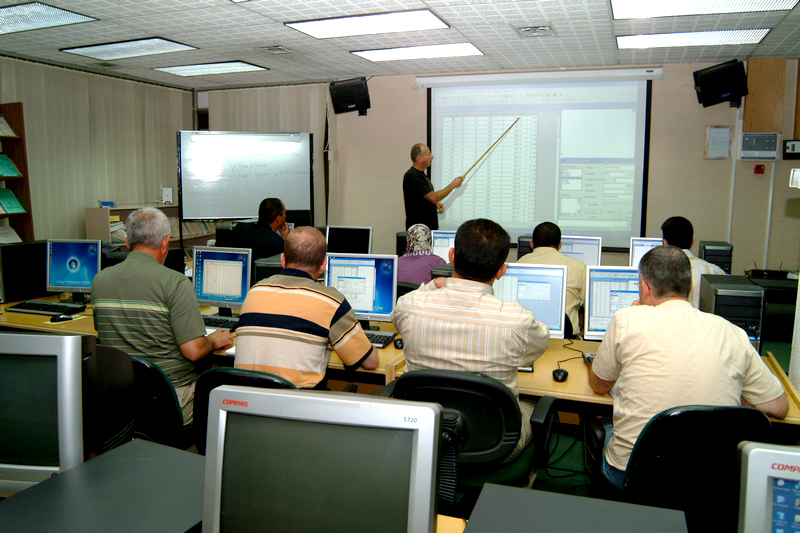
Blue Elephant Consulting is pleased to announce a new training partnership with OakTree Software. The two firms have teamed up to offer a two-day workshop for IT managers. For the first time, management training that was previously only available to Fortune 100 companies will now be made available to any manager or supervisor who needs it.

OakTree Software is a full-service Information Technology Company providing staffing, training, consulting, and network services to clients around the United States since 1995. OakTree is headquartered in Tulsa, Oklahoma, USA.

For the first time, an IT manager workshop called “Secrets Of Becoming An IT Leader Who Can Deliver Real Results” will be offered to the general public. Dr. Jim Anderson will be the instructor and the course will be presented at OakTree’s training facilities in Tulsa on Tuesday and Wednesday, March 1-2, 2011.

To register for this course, click here!

Here’s a description of the course:

Are you a new IT supervisor? Maybe you are a seasoned IT leader. While anyone can be a manager, it takes special skills to become a true IT Leader. Making the transition from an individual technical contributor to managing a team of technical professionals is never easy, and in today’s mixed up global economy it’s become even harder.

OakTree Software has teamed with the industry’s premier IT management skills consultant Dr. Jim Anderson, ”The Business Side of IT Expert,” to present a leadership workshop that has been tailored to meet the unique needs of IT managers and supervisors. Unlike any other management workshop, this is the one that will provide you with the real-world skills that you’re going to need to be successful in 2011 and beyond.

Building on the technical skills that you already have, this two-day workshop will provide you with both the foundational skills and the advanced techniques that you are going to need in order to be successful in an ever-changing world. Forget dry classroom lectures and get ready for the core knowledge, real world examples, and hands on role playing that will bring the skills that you need alive and make it easy to remember everything that is covered.

In order to ensure that you’ll get the opportunity to closely interact with Dr. Anderson and get all of your questions answered, we’re deliberately limiting the number of students that we’ll accept into this class. You can sign up for either one day (Fundamentals Skills) or at a discounted price two days (fundamental skills and Maximum Management Skills).

To register for this course, click here!

Day 1 — Fundamental Skills That Every Technical Manager Needs

    1. Setting Goals That Your Team Will Be Motivated To Achieve
    2. How To Hire The Best Employees (And How To Avoid Making Mistakes)
    3. Keeping The Team That You Have By Making The Grass Greener Here
    4. You Can’t Do It All — Delegate With Confidence
    5. 120 Hours Is Never Enough: How To Manage Your Time In Order To Be Successful
    6. It Takes A Team To Make You Successful
    7. How A Manager Becomes A Coach
    8. Problem Employees: What To Do With Your Bad Apples

Day 2 — Maximum Management: Skills That Produce Superior Managers and Teams

    1. Will You Be Ready When A Crises Hits?
    2. Move Your Career Forward By Moving Your Team Member’s Careers Forward
    3. The Difference Between Management & Leadership
    4. What You Need To Know About Setting & Executing A Strategy
    5. Budgeting: Follow The Numbers
    6. What Your Company’s Financial Statements Are Trying To Tell You
    7. Accounting 101: Using Net Present Value And Internal Rate Of Return To Make Decisions
    8. Follow The Money: How to Use The Breakeven Analysis And Operating Leverage Planning Tools

This is a great investment to make sure 2011 is your best year ever!

Course Prices: Discounted price for Day 1 & Day 2 – $1,450, Day 1 only – $800

To register for this course, click here!

Just For You: The Accidental Successful CIO Newsletter

Friday, June 11th, 2010

Subscribe to The Accidental Successful CIO Newsletter

Subscribe to The Accidental Successful CIO Newsletter

It is with a great deal of pride that I am finally able to announce that free subscriptions to The Accidental Successful CIO Newsletter are now available!

Subscribe to The Accidental Successful CIO Newsletter now: Click Here!

Why A Newsletter? Why Now?

You might be asking why I felt the need to create a newsletter – isn’t this blog enough? Well in all honesty, I thought that it was; however, a bunch of the 400+ folks who read the blog didn’t and they let me know about it.

For the past year or so I’ve been getting a steady stream of emails asking all sorts of questions about just exactly what steps you need to take if you want to develop the leadership skills that every successful CIO must have. Some were simple like “do I need an MBA?” (no), to the more difficult “what should a CIO’s career goal be?” (it depends). It’s pretty clear that most of us know what we want to achieve; however, we’re just not quite sure how to get there. Ultimately everyone seems to be looking for some solid career guidance – mentoring if you will.

That’s the purpose that motivated me to create the newsletter. In the blog we cover a wide range of topics – nothing’s off limits. The newsletter will have a laser-like focus on you and your plan to become a CIO. We’ll talk about the skills and tools that you’ll need in order to be successful, how best to manage your time in order to get the most important things done, etc. This is the kind of information that you desperately need to get your hands on, and now you can.

Subscribe to The Accidental Successful CIO Newsletter now: Click Here!

Do I Really Have Time To Read This?

Careful – if you never become the CIO, you’ll have plenty of time to read it. Think about how much training you’ve received this year so far – I’m betting not much. Your career is your responsibility, nobody else’s. No matter if you are a party of one or if you are supporting a family of 5, you need to keep improving your skills so that you be ready to step into the CIO spot when your time comes.

Take just a moment and click on the “Subscribe Now!” link. All I need is a name and an email address and you’ll be ready to get the first issue of The Accidental Successful CIO Newsletter. Because it’s the right thing for you to do…

Subscribe to The Accidental Successful CIO Newsletter now: Click Here!

Health Care Changes: Is IT Enough?

Wednesday, April 15th, 2009
What Else Is Needed To Make Electronic Health Records A Success?

What Else Is Needed To Make Electronic Health Records A Success?

So here’s the $19B question for you: if you were the CIO in charge of the Obama administration’s big health care initiative, do you think that the “secret sauce” that will make it all work out will be better / more IT?

Just in case you’ve not been following this developing story, one of the the Obama administration’s key election promises was to fix the broken U.S. health care system – it costs too much and delivers too little care. A main tenet of how they are proposing to do this is through IT investments. The poster child of this massive IT investment is something called Electronic Health Records (EHRs).

The administration is forecasting that using EHRs could save the government up to $77B annually! We in IT just LOVE any problem that can be solved by throwing more IT at it; however, as always perhaps we need to take a step back and look more closely at this problem.

Julia Adler-Milstein over at the Harvard Business School has been looking into this issue and she’s made some interesting discoveries. She’s found that the hope for these EHRs are that they will improve work flow, accuracy, communication with patients, access to medical history, and clinical decision making. As we in IT know, more than just IT changes will be needed…

It turns out that studies that have been done by MIT Sloan School’s Erik Brynjolfsson and others have shown that organizations (not just health care industries) can only take advantage of new IT capabilities after they make substantial changes. Oh, oh – this sounds like work.

The types of changes that organizations need to make include increased training and increased individual decision making authority. They also flattened their hierarchies, made better use of their staff, decentralized their teams, and ended up raising the incentives for team performance.

As any CIO knows, IT changes by themselves can’t solve business problems. No matter if you are talking about how to solve the U.S. health care crisis or any industries need for more automation, an IT solution will only go so far. Making the rest of the company understand that IT can provide the tools needed to solve a business problem, but that organizational changes will also be required is a fundamental job for the CIO.

Is your IT department planning on implementing a major electronic record keeping system in order to solve a business problem? Are there organizational changes planned in order to support this new system? Do you have an end user training plan in place yet? Leave me a comment and let me know what you are thinking.

What Toyota Can Teach IT About Dealing With Change

Thursday, December 18th, 2008
Toyota Has Developed Three Ways Of Dealing With Growth And Change

Toyota Has Developed Three Ways Of Dealing With Growth And Change

It may seem odd to to be talking about growth during this time of economic downturn, but once this cycle is done you had better have a good plan for learning to deal with growth. IT has always been about change, but that doesn’t mean that IT leaders are any better than anyone else in dealing with constant change (and growth).

We’ve been talking about Toyota lately and interestingly enough they have a great deal that they can teach IT about how to deal with change and growth. They realize that as an organization becomes larger, communication is one of the first things that will start to deteriorate. After this, it starts to become more difficult to coordinate operations and projects that stretch across the entire company.

In order to deal with problems such as these, Toyota has implemented three separate “forces of integration” that have allowed Toyota’s IT department to be able to keep its focus on Toyota’s mission. These three forces are the founder’s original values, how they manage promotions, and their use of open communication. No high-tech stuff here, but perhaps they still have something to teach IT departments…

The values that have been handed down to Toyota by their founders include the famous kaizen (continuous improvement), respect for fellow employees and what they can accomplish, the power of teamwork, the spirit of humility, the importance of putting the customer first, and finally, just how important it is to see something with your own eyes.

Developing the next round of IT department leaders is done differently at every company. All too often, firms use the “up-or-out” approach – either you get promoted or you eventually get shown the door. This is not the way that Toyota runs their business.

Toyota actually still has a basic guarantee of lifetime employment for its workers. Employees who are under performing are not terminated, rather they have their capabilities upgraded through on the job training. At Toyota, IT workers are asked to think as if they were really operating at two levels above their current rank. This allows all employees to have more context added to their perspective.

Open communication is critical to everything that Toyota does. They have actually been able to accomplish what every IT department would like to do: have information flow freely both up and down the hierarchy as well as across both seniority and functional boundaries.

In the 21st Century, Toyota still feels that human to human networks are of the highest importance. Executives go to the lowest levels in the company and have discussions with the workers there in order to understand what is going on.

At Toyota it’s ok for IT workers to speak up when they disagree with what someone is saying – even if it’s their boss. The ultimate assignment for every employee is to do what they think is right – not just what the boss is telling them to do.

In the end, Toyota is a hard company for any IT department to try to emulate. The reason for this is because Toyota’s success does not just come from doing (or not doing) any one thing. Instead, it’s really about a culture that Toyota has created that allows all of its departments to be a success. Even though it may seem impossible to replicate this environment in your IT department, keep in mind that at Toyota they view trying as the greatest achievement and failure is just one step towards success.

Does your IT department have any values that it has inherited from past management? Do you work with employees that are not ready to be promoted in order to get them ready – or do you just let them go? Would you say that your IT department has open flows of communication? Leave me a comment and let me know what you are thinking.